Stop Querying Data. Start Controlling Outcomes.
HTQL is a financial execution language — built for systems that require precision, determinism, and profit control. One system. One language. One source of truth.
Hello Profit Guard
The HTQL Shift
From Querying to Execution
Financial-Native Functions
NPV, IRR, margin, cost, and capital evaluation — embedded directly. No transformation layer. No spreadsheet workarounds. HTQL speaks finance natively.
Learn More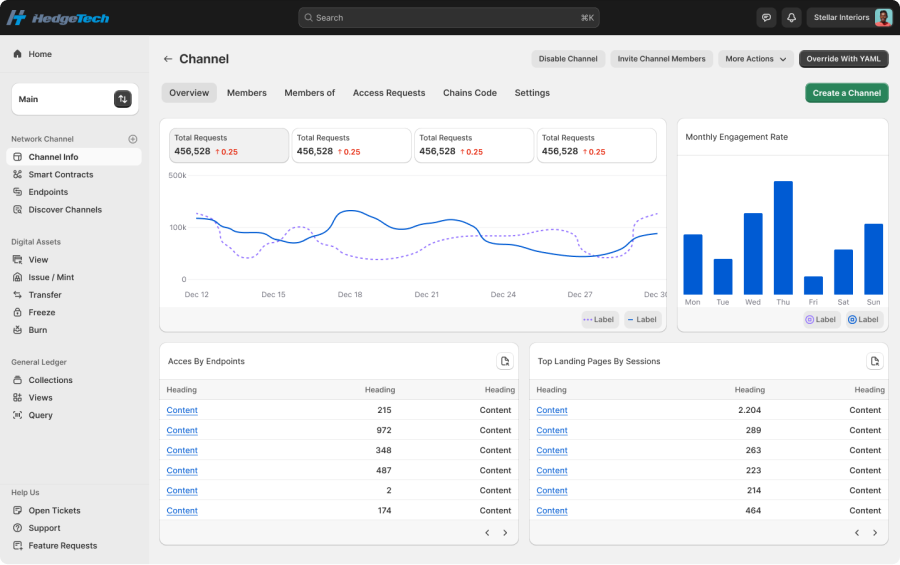
Deterministic Policy Execution
Rules execute at runtime: if margin falls below threshold, reject. If acquisition cost exceeds lifetime value, require review. Every decision is predictable, repeatable, and auditable.
Learn More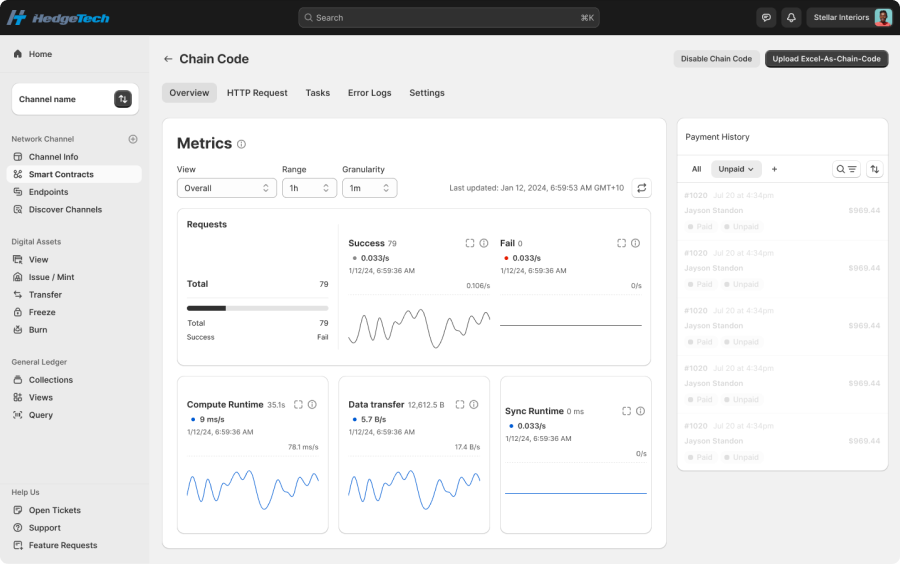
Why Traditional Systems Fail
The Problem Nobody Admits
SQL Returns Data, Not Meaning
BI tools show visuals, not actions. Analytics produces reports, not enforcement. This leads to duplicate logic, Excel becoming the real engine, and silent profit leakage.
Execution Inside the Transaction
HTQL operates before checkout completes, before pricing is accepted, before risk is taken. Not after. Data, logic, and financial rules — unified and executed deterministically.
Single Source of Truth
Every additional system introduces logic duplication, interpretation gaps, and financial inconsistency. HTQL eliminates this with one execution layer and one financial model.
Technical Guides
For Developers
Latest Publications

Topic
The Real-Time Dashboard That Executes, Not Observes
Most dashboards are built for comfort. They reassure you that something is happening. Numbers move. Charts update. Colours change. But none of that creates control. Because by the time you see the numbers, the decision has already been made. The discount has been applied. The margin has already dropped. The inventory imbalance has already occurred. **Traditional dashboards are post-event observers.** They show you what happened — after it happened. They visualise consequences, not prevent them. This is the uncomfortable truth most businesses avoid: your dashboards are expensive mirrors. They reflect reality. They do not shape it.
September 9, 2026

Topic
Financial Reporting That Doesn’t Need Explanation
Most financial reports come with explanations. Footnotes. Adjustments. Clarifications. Because they don’t match reality. They are reconstructed from multiple systems, inconsistent logic, delayed entries, and manual corrections. By the time a P&L reaches a decision-maker, it has been assembled from fragments — each with its own timing, its own rules, its own interpretation. This is where trust breaks down. Not because people are dishonest, but because **the system makes accuracy impossible**. When reporting is a separate process from execution, discrepancies are inevitable.
September 9, 2026

Topic
Discount Governance That Eliminates Financial Risk
Discounts are the most dangerous lever in commerce. They feel harmless. They look small. They scale quickly. And they destroy margins silently. The issue is not the discount itself. It is the absence of enforcement. Most systems allow discounts to be created freely. Validation happens later — if at all. A marketing team creates a 20% promotion. A store manager adds a VIP discount. A loyalty program triggers points. A bundle offer adjusts pricing. Each one makes sense in isolation. **Together, they compound into uncontrolled margin erosion.** And no one notices until the month-end review.
September 9, 2026

Topic
Procurement That Locks Profit Before It Enters the System
Most businesses focus on revenue. The best businesses focus on cost. Because profit is secured before the sale — at the point of procurement. Yet most procurement systems operate on static costing. A supplier quotes a price. Someone enters it into a spreadsheet. That number becomes the “cost” for months — regardless of what actually happens with freight, currency, quality, or volume. By the time the real cost is known, the margin is already committed. And often, it is already lost. HTQL transforms procurement into a StateMachine-controlled financial process where **every decision is validated before commitment**.
September 9, 2026

Topic
Inventory Intelligence That Enforces Financial Integrity
Inventory errors are not operational issues. They are financial violations. Most systems treat inventory as a count — how many units are where. HTQL treats it as a controlled financial asset. Every unit represents capital. Misplaced capital. Idle capital. At-risk capital. When inventory is wrong, your financial statements are wrong. When counts drift from reality, your margins drift from truth. This is not an operational inconvenience. **It is a financial integrity problem.** And most systems are not designed to prevent it — only to report it after the fact.
September 9, 2026
FAQ
Questions And Answers
What is HTQL?
What is Profit Guard?
Do I need technical skills to use Profit Guard?
How is HTQL different from other analytics tools?